
Climate Change Action Plan
Climate change is impacting the Columbia River Gorge National Scenic Area. We are seeing higher temperatures, stronger storms, and more intense wildfires. These changes affect the lands and waters we protect and the communities we support through the National Scenic Area Act. The Gorge Commission approved a regional Climate Change Action Plan to identify the greatest needs and opportunities to address climate change in our work. Through collaboration with tribes, counties, agencies, community organizations, and others, we are building resilience in the face of a changing climate.
Overview
The Climate Change Action Plan includes priorities for adaptation (adjusting to climate change impacts) and mitigation (reducing greenhouse gas emissions and enhancing carbon storage in habitats and working lands).

To learn more about our work toward climate goals, check out the 2025 Climate Action Annual Report.
Click here to download a PDF of the Climate Change Action Plan.
Click here to download a PDF of the Executive Summary – Climate Change Action Plan
Background on Climate Change Action Plan
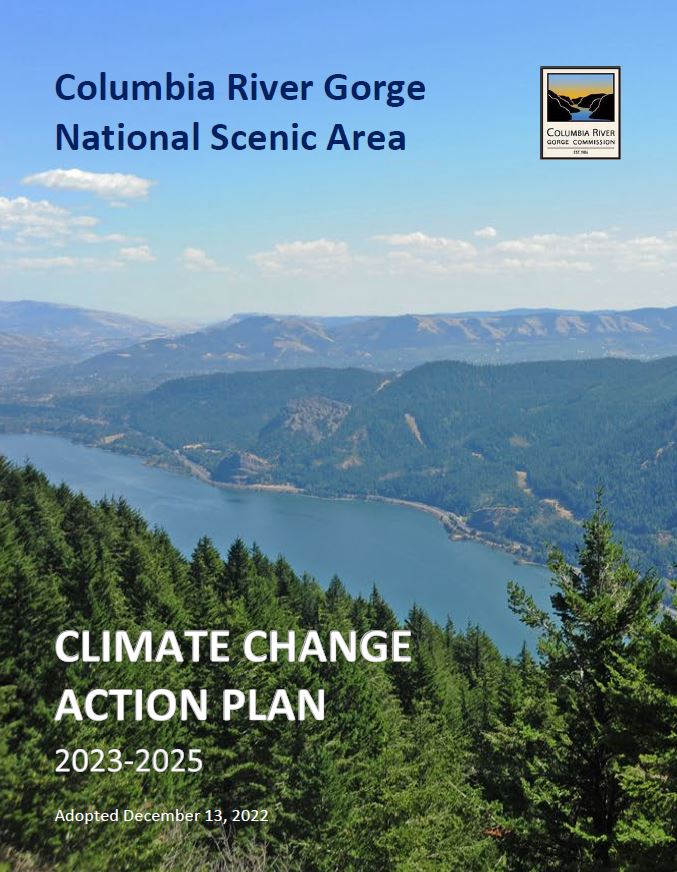
The Gorge Commission unanimously adopted the Climate Change Action Plan at its meeting on December 13, 2022. Commission staff worked with dozens of partners including tribes, county planning departments and commissions, state and federal agencies, community organizations, and others to develop the Climate Change Action Plan. We are deeply grateful to all those who helped develop this plan and offered input during the public comment period. The Action Plan is a living document that will be updated as we accomplish goals, continue to learn about climate impacts in the region, and identify new priorities over time.
Action Spotlight: 2025 Climate Stewards Community Training in the Columbia Gorge
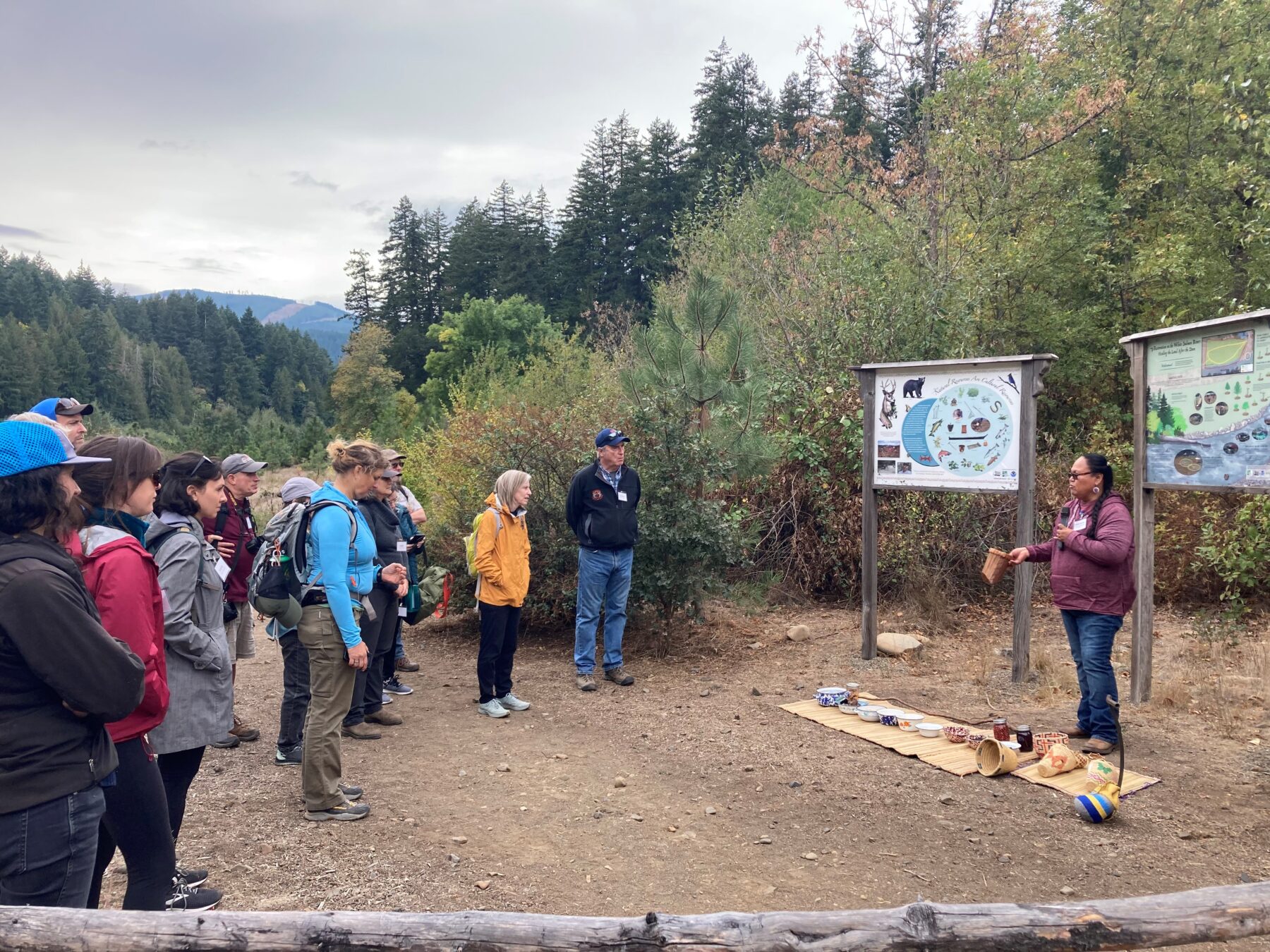
Building on the success of our 2023 Climate Stewards pilot course, we partnered with Oregon State University Extension Service to host a second Climate Stewards training in the Columbia River Gorge in April-June 2025. Community members in this program learned about local climate change impacts, climate communication methods, and opportunities to get involved in community and ecosystem resilience efforts. Past participants worked on a variety of projects supporting several Climate Change Action Plan priorities including wetlands, cold water refuge streams, and fire risk.
Resources
Below you will find staff reports and resources related to the Climate Action Program dating back to 2019.
Staff Reports
May 12, 2026 – Guest Presentations: Introduction to OR Executive Orders 25-26 and 25-29 and WA Climate Resilience Strategy
March 10, 2026 – Climate Equity Recommendations
March 10, 2026 – 2025 Climate Action Annual Report
July 8, 2025– Staff Assessment of Oak Policy Issues in the CRGNSA
April 8, 2025 – 2024 Climate Action Annual Report
October 8, 2024 – Climate Action Quarterly Progress Report
July 9, 2024 – Climate Action Quarterly Progress Report
March 12, 2024 – 2023 Climate Action Annual Report Staff Report
October 10, 2023 – Climate Change Action Program Quarterly Progress Report
July 11, 2023 – Climate Change Action Plan Quarterly Progress Report
December 13, 2022 – Request to Approve National Scenic Area Climate Change Action Plan
November 8, 2022 – Request to Approve National Scenic Area Climate Change Action Plan
September 13, 2022 – Climate Change Action Plan Summary of Comments Staff Report
April 27, 2022 – Press Release – Draft Climate Change Action Plan
March 8, 2022 – Draft Climate Change Action Plan Staff Report
October 12, 2021 – Climate Change Action Planning Progress Report
September 23, 2021 – Climate Change Action Plan Overview
June 8, 2021 – Progress update on assessing vulnerabilities and setting criteria for prioritizing actions
March 9, 2021 – Introduction to the climate change action planning process and approach
February 11, 2020 – Draft Climate Change Mitigation and Adaptation Strategies and Potential Actions Staff Report
October 8, 2019 – Summary of Climate Change Effects in the Columbia River Gorge National Scenic Area: A report by Owen Wozniak provided to the Gorge Commission in support of Gorge 2020
To Learn More
For more information about how to get involved in climate action efforts in the Gorge, contact Lisa Naas Cook, Climate Program Manager at Lisa.NaasCook@gorgecommission.org.