

Commissioner Nathan Reynolds
County Appointed Commissioner: Clark | Term: 2024–2027
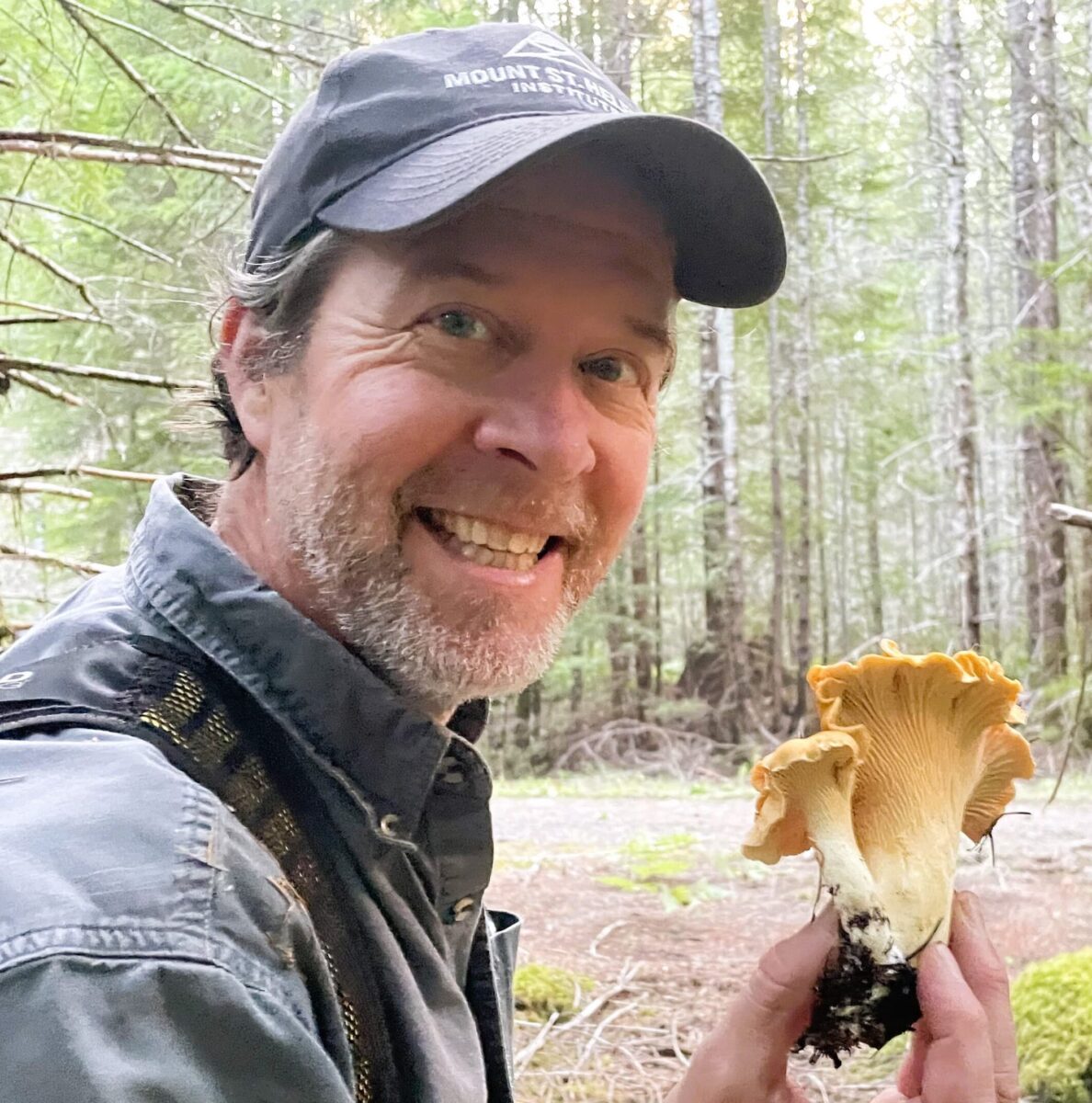
Nathan grew up in Camas and still resides in unincorporated Clark County on a few quiet acres near town. In his youth, he hiked, camped, fished, canoed, sailed, and explored the landscapes of Mount St. Helens, Mt. Hood and the Columbia River Gorge running between. He has been involved in natural resources education and land management issues in southwest Washington State for decades.
He received a BS in Natural Resource Sciences and an MS in Environmental Science and Regional Planning from the Vancouver branch campus of WSU. During his education, he interned for both the USFS Gifford Pinchot NF and Washington Department of Fish and Wildlife. He spent 15 years as an ethnoecologist for the Cowlitz Indian Tribe, serving first in the Natural Resources Department, then later as Tribal Historic Preservation Officer and Interim Director of the Cultural Resources Department. He is currently the Executive Director of the Opal Creek Ancient Forest Center in Oregon and serves on the boards of the Mount St. Helens Institute and the Cascade Forest Conservancy.
As a life-long learner, Nathan’s passion is to provide transformative educational experiences for the next generation of nature’s stewards, and he strongly supports Outdoor School for All programming in Washington and Oregon. He has published several articles in refereed journals dealing with geology, wildlife biology and anthropology, including topics within the Columbia River Gorge. He recently became a member of the Quaternary Research Center at the University of Washington.
Nathan is deeply aware how humans and landscape integrate, and is an active proponent of wise use, stewardship and sustainability. The Columbia River Gorge has drawn people for over 13,000 years – our current decision-making should improve prospects for all future generations and ensure the Columbia River Gorge remains a magnificent place to live, work, play and learn.